
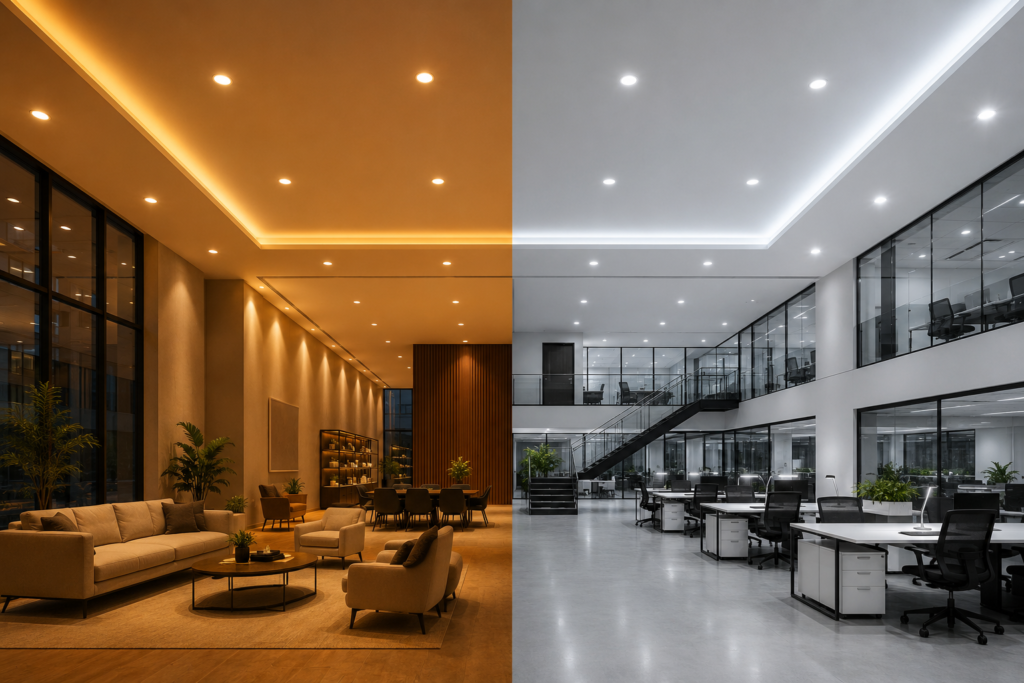
Smart Lighting Systems vs Traditional Lighting: Which Is Better for Modern Buildings?
Lighting is one of those building decisions that is easy to underestimate. A space can have beautiful architecture, premium finishes and carefully selected furniture, yet still feel uncomfortable when the lighting is poorly planned.
Traditional lighting has served buildings well for decades. Switches, fixed fixtures and manually controlled circuits are simple and familiar. But modern buildings are expected to do much more. They need to be energy conscious, adaptable, comfortable and increasingly responsive to how people actually use the space.
This is where smart lighting systems are changing the way lighting is planned and operated.
The real question is not whether smart lighting is more technologically advanced. It is whether that technology delivers meaningful benefits for a particular building. For offices, hotels, retail spaces, residential developments and large commercial projects, the answer can often be yes.
What Are Smart Lighting Systems?
Smart lighting systems are lighting solutions that use connected controls, sensors, automation and programmable settings to manage how lighting operates within a building.
Instead of relying entirely on someone to switch lights on or off, an intelligent lighting setup can respond to occupancy, daylight levels, schedules and user preferences.
In simple terms, traditional lighting mainly provides illumination, while intelligent lighting can also manage when, where and how that illumination is delivered.
A well planned system may include:
- Occupancy sensors
- Daylight sensors
- Automated dimming
- Centralised lighting controls
- Pre programmed lighting scenes
- Remote monitoring
- Scheduling
- Integration with building automation systems
The objective is not to make lighting complicated. The objective is to make it work more intelligently.
How Traditional Lighting Works
Traditional lighting generally follows a straightforward model. Fixtures are connected to electrical circuits and controlled using switches, dimmers or basic timers.
This approach has several advantages.
It is familiar to users, relatively simple to install and easy to understand. For smaller spaces with predictable usage patterns, traditional lighting can still be a practical solution.
However, traditional lighting has limitations in larger or more dynamic buildings.
A meeting room may remain fully illuminated even when nobody is using it. Corridors may operate at the same brightness throughout the day. Areas receiving abundant natural daylight may continue consuming artificial lighting unnecessarily.
These small inefficiencies can become significant when multiplied across an entire building.
Smart Lighting vs Traditional Lighting
The difference becomes clearer when both approaches are compared based on everyday building requirements.
Control and Convenience
Traditional systems usually depend on manual operation. Someone has to switch or adjust the lighting.
With lighting automation, many of these actions can happen automatically.
Lights can switch on when occupancy is detected, dim when sufficient daylight is available or follow programmed schedules.
For building managers, this can make lighting easier to control across multiple areas.
Energy Efficiency
Energy efficiency is one of the strongest arguments for smart lighting systems.
Traditional lighting can consume energy even when rooms are unoccupied or when artificial illumination is unnecessary.
Smart controls can reduce this waste by adjusting lighting according to actual requirements.
For example, an office meeting room may need full lighting during a presentation but significantly less illumination when the room is empty. An automated system can respond to those changes without depending entirely on employees remembering to switch the lights off.
Flexibility
Modern buildings rarely have completely static layouts or usage patterns.
Offices may change their workspaces. Hotels operate differently during different parts of the day. Retail stores may adjust lighting according to displays, promotions or customer movement.
This is where smart lighting design offers an important advantage.
Lighting can be programmed into different scenes and settings depending on the activity taking place in a space.
A conference room, for example, could have separate settings for presentations, discussions and cleaning.
User Comfort
Good lighting is not simply about making a room bright.
Excessive brightness, glare and poorly balanced illumination can affect how comfortable a space feels.
A properly designed intelligent system can provide greater control over brightness and timing. When combined with daylight management, it can help create a more balanced visual environment.
This is particularly valuable in workplaces where people spend long periods indoors.
Where Smart Lighting Makes the Most Sense
Not every building needs the same level of lighting control. The value of smart lighting systems often increases as the size, complexity and operating hours of a building increase.
Commercial Offices
Large offices can benefit from occupancy based controls, daylight management and scheduled lighting.
Different areas can have different lighting requirements, allowing the system to respond to how employees actually use the workplace.
Hotels
Hotels have diverse lighting requirements across guest rooms, lobbies, restaurants, corridors and outdoor areas.
A carefully planned smart lighting design can create different moods while giving operators greater control over energy consumption and daily lighting schedules.
Retail and Showrooms
Lighting directly influences how products and displays are perceived.
Smart controls allow lighting levels and scenes to change according to operating hours, events and display requirements without redesigning the entire electrical system.
Residential Buildings
Smart lighting is also becoming increasingly relevant in modern homes and residential developments.
Residents can create personalised scenes, schedule lighting and integrate it with other home automation functions.
Large Public and Commercial Spaces
Airports, institutions, hospitality properties and large mixed use developments can have thousands of fixtures operating across different zones.
In such environments, centralised control and automation can provide practical operational benefits that basic switching cannot easily deliver.
Is Smart Lighting More Expensive?
The initial investment can be higher than a basic traditional lighting installation.
That is an important consideration and should not be ignored.
Smart lighting requires additional components such as sensors, controllers, communication infrastructure and control interfaces. The design and commissioning process can also be more involved.
However, comparing only the installation cost can give an incomplete picture.
A building should be evaluated based on its total operating value. Reduced energy consumption, better control, easier management and greater flexibility can contribute to long term savings.
The right question is therefore not simply, “Which system costs less to install?”
It is, “Which system provides better value throughout the building’s operating life?”
Does Every Modern Building Need Smart Lighting?
No.
A small space with limited operating hours and simple lighting requirements may not need a sophisticated automation system.
For such projects, traditional lighting can remain perfectly suitable.
Smart lighting becomes more compelling when a project has multiple zones, long operating hours, changing occupancy, significant energy consumption or a requirement for centralised control.
The best approach is to match the technology with the building rather than adding automation simply because it is available.
What Makes Good Smart Lighting Design?
Technology alone does not guarantee a successful lighting project.
Good smart lighting design starts with understanding the building.
The designer needs to consider how each space is used, where natural daylight enters, how people move through the building and what level of control occupants and facility managers actually need.
Sensors should be positioned carefully. Lighting zones should make practical sense. Controls should be intuitive rather than confusing.
Most importantly, automation should support the experience of the space.
A system that saves energy but frustrates occupants is not necessarily a successful lighting solution.
The Future of Building Lighting
Modern buildings are becoming increasingly connected. Lighting is no longer necessarily an isolated electrical function.
It can form part of a broader building management strategy alongside climate control, security, occupancy monitoring and other automated systems.
This makes intelligent lighting particularly relevant for buildings designed with long term efficiency and adaptability in mind.
As expectations around energy management and occupant experience continue to evolve, lighting systems will increasingly need to respond to real building conditions rather than operate according to fixed assumptions.
Smart Lighting or Traditional Lighting: Which Is Better?
There is no universal winner.
Traditional lighting is simple, familiar and appropriate for many straightforward applications.
Smart lighting systems offer greater control, automation, flexibility and opportunities for improved energy management, particularly in larger and more complex buildings.
For a modern commercial or high value building, the strongest solution may also be a combination of both approaches. Not every light needs advanced automation. Strategic use of sensors, dimming and controls in the right areas can deliver meaningful benefits without unnecessary complexity.
The best lighting system is ultimately the one that supports the building’s purpose, occupants and operational requirements.
If you are planning a modern building, reviewing the lighting strategy at the design stage can help you make better decisions about control, efficiency and long term performance. A well considered smart lighting design can turn lighting from a basic building service into an active part of the overall experience.
FAQs
Are smart lighting systems better than traditional lighting?
For many modern buildings, smart lighting can offer greater control, automation, flexibility and energy management. Traditional lighting can still be suitable for smaller or simpler spaces.
Do smart lighting systems save electricity?
They can reduce unnecessary lighting use by responding to occupancy, daylight and schedules. Actual savings depend on the building, lighting design, controls and how the system is operated.
Is smart lighting expensive to install?
The initial installation can cost more than traditional lighting because of additional controls, sensors and infrastructure. Long term operating benefits should be considered when evaluating the investment.
Can smart lighting be used in commercial buildings?
Yes. Offices, hotels, retail spaces, showrooms and other commercial properties can benefit from automated lighting controls when the system is designed around the building’s actual requirements.
What is smart lighting design?
Smart lighting design is the planning of lighting fixtures, controls, sensors, automation and lighting zones so that illumination can respond efficiently to occupancy, daylight, schedules and user requirements.