
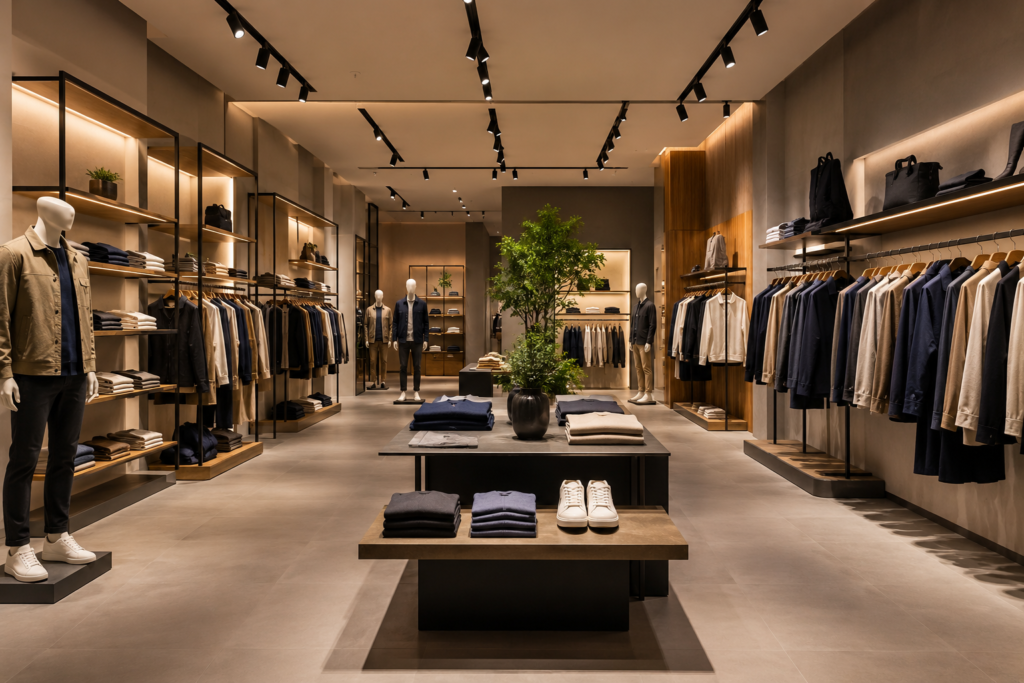
Walk into two stores selling similar products and you may immediately feel that one is more inviting than the other. The difference isn’t always the layout, merchandise, or décor. Often, it is the lighting.
Poor lighting can make products look flat, create uncomfortable glare, hide important displays, and make a store feel cold or unwelcoming. Well-planned retail lighting design, on the other hand, can guide customers through a space, highlight products, establish the right mood, and make the entire shopping experience feel more intentional.
Lighting should therefore be treated as more than a functional requirement. It is part of the retail experience.
What Is Retail Lighting Design?
Retail lighting design is the strategic planning and placement of lighting within a retail environment to improve visibility, atmosphere, product presentation, navigation, and customer experience.
It combines different types of lighting—such as ambient, accent, task, and decorative lighting—to create a balanced environment.
The goal isn’t simply to make a store brighter. In fact, making everything equally bright can have the opposite effect.
Effective retail lighting creates visual hierarchy. It helps customers understand where to look, what deserves attention, and how they should move through the store.
Why Lighting Matters in Retail Stores
Customers may not consciously analyze a store’s lighting, but they certainly experience its effects.
Lighting can influence:
- How attractive products appear
- Whether customers notice promotional displays
- How long shoppers feel comfortable staying inside
- The perceived quality of merchandise
- The atmosphere and personality of the brand
- How easily customers navigate the store
- Whether particular areas feel inviting or neglected
Consider a fashion showroom. If the lighting produces harsh shadows or inaccurate colours, clothing may appear different under natural light. A customer could hesitate to purchase because the product doesn’t look as appealing as expected.
Similarly, in a jewellery store, simply flooding the room with bright light isn’t enough. Carefully positioned accent lighting can create controlled sparkle and draw attention to individual pieces.
The Four Layers of Effective Retail Lighting
A strong commercial lighting design usually combines multiple lighting layers rather than relying on one uniform source.
1. Ambient Lighting
Ambient lighting provides the general illumination of the store.
It should make customers feel comfortable while providing enough visibility to move around safely and examine merchandise.
The mistake is assuming that ambient lighting should be equally strong everywhere. Different zones may require different lighting levels depending on their purpose.
2. Accent Lighting
Accent lighting is used to attract attention to specific products, displays, architectural features, or promotional areas.
For example, a spotlight can draw the eye toward:
- A new product collection
- A premium display
- A mannequin
- A promotional installation
- A hero product
This creates contrast and gives the store a visual hierarchy.
3. Task Lighting
Task lighting provides focused illumination where customers or employees need to perform a particular activity.
Checkout counters, fitting areas, product demonstration zones, and service desks may all benefit from task lighting.
The key is to provide sufficient visibility without creating uncomfortable glare.
4. Decorative Lighting
Decorative fixtures contribute to the store’s visual identity.
Pendant lights, statement fixtures, concealed lighting, and architectural elements can reinforce the character of a brand.
However, decorative lighting should support the shopping environment rather than become the main attraction. A beautiful fixture that creates glare or poor illumination is still a bad lighting decision.
How Retail Lighting Influences Customer Experience
It Guides Customers Through the Store
Lighting can subtly influence movement.
Brighter displays, illuminated focal points, and changes in lighting intensity can help create a natural path through the store. Customers don’t necessarily realize they are being guided, which is precisely why this approach can be effective.
Instead of relying entirely on signs, retailers can use light to establish visual destinations.
It Makes Products More Appealing
Product presentation is one of the most important jobs of retail store lighting.
The right colour temperature, beam angle, intensity, and positioning can make merchandise look significantly better.
For example:
- Fashion benefits from lighting that represents colours accurately.
- Jewellery can use carefully controlled highlights to create sparkle.
- Food displays need lighting that makes products appear fresh and appetising.
- Electronics require clear illumination without distracting reflections.
There is no universal lighting setup that works for every retail category.
It Creates the Right Emotional Atmosphere
Lighting contributes heavily to how a store feels.
A premium showroom may use controlled accent lighting and warmer tones to create an intimate atmosphere. A contemporary electronics store may require a cleaner, brighter environment that communicates precision and technology.
The important question isn’t simply, “Is this store bright enough?”
It is:
“Does the lighting communicate what this brand wants customers to feel?”
Lighting for Showrooms: What Should You Consider?
Showroom lighting needs to balance presentation and practicality.
Customers should be able to examine products from different angles while still experiencing a visually appealing environment.
A good showroom lighting strategy considers:
Product Colour Accuracy
If the lighting changes the perceived colour of a product, customers may develop incorrect expectations.
Colour rendering should therefore be considered when selecting light sources, particularly for fashion, interiors, paint, cosmetics, and other colour-sensitive products.
Glare Control
Glare can make an otherwise sophisticated showroom uncomfortable.
This is particularly important for glossy surfaces, glass, mirrors, screens, and polished materials.
Light should be positioned to illuminate the product—not bounce directly into the customer’s eyes.
Beam Angles
A narrow beam can create a dramatic focal point, while a wider beam provides more even illumination.
Using the same beam angle throughout a showroom can make the lighting feel flat. Combining different distributions can create depth and visual interest.
Common Retail Lighting Mistakes
Even expensive lighting equipment won’t rescue a poorly planned design.
Making Everything Equally Bright
Uniform brightness removes visual hierarchy.
If everything demands attention, nothing stands out.
Ignoring Glare
Glare can make customers uncomfortable and reduce visibility, particularly around reflective surfaces.
Choosing Fixtures Before Understanding the Space
Starting with attractive fixtures instead of understanding the store layout, merchandise, ceiling height, customer movement, and brand identity is backwards.
The lighting strategy should come first. Fixtures should support it.
Using the Wrong Colour Temperature
A lighting colour that works beautifully in one retail environment may feel completely wrong in another.
The choice should reflect the merchandise, architecture, brand positioning, and desired atmosphere.
Forgetting Maintenance
Dust, ageing components, failed lamps, and inconsistent colour can gradually affect the appearance of a store.
Retail lighting should be designed with maintenance and accessibility in mind from the beginning.
How to Plan a Better Retail Lighting Design
Before selecting fixtures, work through these questions:
- What is the customer supposed to notice first?
- Which products or areas need additional emphasis?
- Where do customers spend the most time?
- Are there reflective surfaces that could create glare?
- Does the lighting accurately represent product colours?
- What atmosphere should the brand communicate?
- How will the lighting change throughout the store?
- Can fixtures be adjusted as displays change?
- How easy will the system be to maintain?
- Can different zones be controlled independently?
These questions prevent lighting from becoming an afterthought.
The Role of Energy Efficiency
Retailers also need to consider operating costs.
Modern lighting systems can offer better control, zoning, dimming, and energy efficiency than older systems. But efficiency shouldn’t be evaluated only by the wattage of individual fixtures.
The entire lighting strategy matters.
A well-designed system can reduce unnecessary illumination by directing light precisely where it is needed rather than simply increasing brightness across the entire store.
Frequently Asked Questions
What is the main purpose of retail lighting design?
The main purpose is to create a visually comfortable and effective shopping environment while improving product presentation, customer navigation, brand perception, and overall experience.
How does lighting affect customer behaviour in retail stores?
Lighting can influence where customers look, which products they notice, how comfortable they feel, and how they perceive the atmosphere and quality of a store. It can also help establish natural focal points and circulation paths.
What type of lighting is best for retail stores?
There is no single best type of lighting for every store. A combination of ambient, accent, task, and decorative lighting is generally more effective because each layer serves a different purpose.
Why is colour temperature important in retail lighting?
Colour temperature affects the atmosphere and appearance of merchandise. The wrong choice can make a store feel uncomfortable or cause products to appear different from how they would look under other lighting conditions.
What is the difference between retail lighting and showroom lighting?
Retail lighting typically focuses on both customer movement and merchandise presentation, while showroom lighting often places greater emphasis on displaying products from different angles and creating a carefully controlled presentation environment. The two approaches can overlap considerably.
How can retailers avoid glare?
Retailers should consider fixture positioning, beam angles, optics, reflective surfaces, and viewing angles during the design stage. Light should illuminate merchandise effectively without shining directly toward customers.
Final Thoughts
Good retail lighting doesn’t scream for attention. It quietly makes the entire store work better.
It helps customers see products clearly, creates visual priorities, reinforces the brand, and makes the shopping environment more comfortable. More importantly, it connects the physical store with the experience the retailer wants customers to have.
The biggest mistake is treating lighting as something to install after the interior design is finished.
Retail lighting design should be considered alongside layout, merchandising, architecture, and customer movement from the beginning. When those elements work together, lighting becomes more than illumination—it becomes a powerful part of the retail experience.