
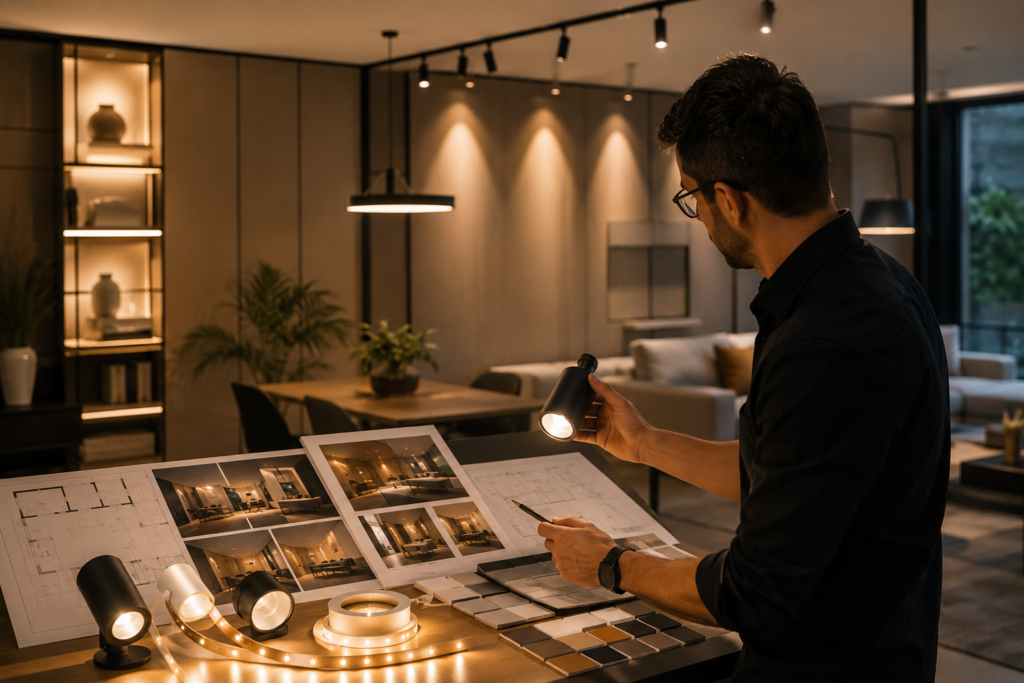
A beautifully designed space can still feel wrong when the lighting is poorly planned.
A living room may have expensive furniture but feel dull. A retail store may have attractive products that fail to catch attention. An office may look bright but create glare and eye discomfort. Even an architecturally impressive building can lose its impact when important details disappear after sunset.
This is where a lighting design consultant makes a difference.
Lighting is not simply about deciding where to install lights. It involves understanding the architecture, purpose of the space, people using it, visual comfort, ambience, energy consumption, and the way light interacts with materials and surfaces.
A professional lighting consultant brings these considerations together to create a lighting environment that is functional, comfortable, visually appealing, and appropriate for the project.
What Is a Lighting Design Consultant?
A lighting design consultant is a specialist who plans and develops lighting solutions for residential, commercial, hospitality, retail, architectural, and other built environments.
Their role goes beyond selecting attractive light fixtures. They determine how light should be distributed throughout a space and how different lighting layers should work together.
A typical lighting design may consider:
- The purpose of each space
- Natural daylight availability
- Brightness and illumination requirements
- Glare and visual comfort
- Colour temperature
- Colour rendering
- Fixture positioning
- Architectural features
- Energy efficiency
- Lighting controls
- Maintenance requirements
- Overall visual experience
In simple terms, a lighting consultant helps answer an important question: How should this space look and feel when light becomes part of the design?
What Does a Lighting Design Consultant Actually Do?
The exact scope varies from project to project, but professional lighting design services commonly involve several important stages.
1. Understanding the Architecture and Space
Lighting should never be planned independently of the architecture.
A consultant studies the floor plan, ceiling heights, materials, furniture arrangement, façade, circulation areas, and important architectural features.
For example, a textured wall, artwork, staircase, reception desk, or decorative ceiling may require very different lighting approaches.
The goal is to make lighting support the architecture rather than compete with it.
2. Developing a Lighting Concept
The consultant creates an overall lighting strategy based on the project’s purpose and design direction.
A restaurant might require warm, intimate lighting that creates a comfortable dining atmosphere. A retail environment may need brighter accent lighting to draw attention to products. An office may prioritise comfortable, evenly distributed illumination.
This is an important distinction between simply buying lights and creating architectural lighting design.
The fixture is only one part of the solution. The real design lies in deciding where, how, and why the light is used.
3. Selecting the Right Fixtures
There are countless lighting products available, but more choices do not necessarily make the decision easier.
A lighting professional considers factors such as:
- Beam angle
- Light output
- Colour temperature
- Colour rendering
- Fixture size
- Mounting method
- Glare
- Dimming capability
- Efficiency
- Maintenance
- Compatibility with the overall design
The right fixture is one that performs correctly within the space—not simply one that looks attractive in a catalogue.
4. Creating Different Layers of Light
Effective lighting rarely comes from a single source.
A well-designed space often combines three major layers:
Ambient lighting provides general illumination.
Task lighting provides focused light for activities such as reading, cooking, working, or displaying products.
Accent lighting highlights specific architectural or decorative elements.
Combining these layers creates depth and flexibility. Instead of making an entire room equally bright, lighting can establish hierarchy and guide attention.
Why Is Architectural Lighting Design Important?
Architectural lighting design treats light as part of the architecture rather than an afterthought.
Consider a building with an interesting façade. During daylight, its form may be obvious. At night, however, poor lighting can make those architectural details disappear.
A carefully planned lighting scheme can reveal textures, create shadows, emphasise proportions, and establish a visual identity after dark.
This is particularly important for:
- Residential buildings
- Hotels and restaurants
- Retail stores
- Corporate offices
- Showrooms
- Luxury interiors
- Cultural spaces
- Landscapes and façades
Good lighting can influence how people perceive the size, character, quality, and atmosphere of a space.
5 Reasons Your Project May Need a Lighting Consultant
1. Lighting Becomes Part of the Design From the Beginning
One of the biggest mistakes is treating lighting as something to figure out after the interior or architectural design is complete.
When lighting is considered early, the consultant can coordinate it with ceilings, furniture, electrical planning, materials, façade details, and architectural elements.
This reduces compromises later.
2. Better Visual Comfort
More light does not automatically mean better lighting.
Excessive brightness, poorly positioned fixtures, reflections, and direct glare can make a space uncomfortable.
A professional lighting design consultant considers how people will actually experience the light from different positions and viewing angles.
3. Greater Control Over Ambience
Different activities often require different lighting conditions.
A hospitality space, for example, may need one lighting scene during daytime operations and another during evening hours.
With appropriate fixtures and controls, lighting can become adaptable rather than static.
4. Highlighting What Matters
Lighting can direct attention.
In a showroom, it can help products stand out. In a home, it can emphasise artwork or architectural details. In a commercial building, it can strengthen the entrance and reception experience.
This makes lighting an important part of visual communication.
5. Better Long-Term Planning
Lighting decisions affect installation, operation, maintenance, and energy consumption.
A consultant can help evaluate the practical implications of different lighting approaches instead of focusing only on the initial appearance.
Lighting Design Consultant vs. Lighting Supplier: What’s the Difference?
The two roles are not necessarily the same.
A lighting supplier primarily focuses on providing lighting products.
A lighting design consultant, on the other hand, focuses on how lighting should work within the project.
For example, a supplier may recommend a particular downlight. A consultant considers whether a downlight is actually appropriate for that location, how many are required, what beam angle should be used, whether glare will be an issue, and how it interacts with the rest of the lighting scheme.
This distinction becomes particularly valuable for complex or design-sensitive projects.
When Should You Hire a Lighting Design Consultant?
Ideally, lighting planning should begin during the early design stages.
Bringing a consultant into the project early allows lighting decisions to be coordinated with architecture and interiors before construction details are fixed.
Consider professional lighting design services especially when:
- The project has complex architectural features.
- The lighting needs to create a specific ambience.
- The façade or landscape requires night-time illumination.
- There are multiple functional zones.
- The project involves premium interiors or hospitality spaces.
- Lighting is an important part of the customer experience.
- You want better coordination between architecture, interiors, and electrical planning.
How to Get Better Results From Your Lighting Consultant
Before the design process begins, provide as much context as possible.
Share:
- Architectural drawings
- Interior design plans
- Furniture layouts
- Material selections
- Intended use of each space
- Brand or design references
- Budget expectations
- Operational requirements
- Any specific visual priorities
Also communicate what you don’t want.
For example, if glare is a major concern in an office or you want a restaurant to avoid an overly bright atmosphere, saying this early helps shape the design.
Frequently Asked Questions
What is the role of a lighting design consultant?
A lighting design consultant plans how artificial and, where relevant, natural light should work within a space. Their responsibilities can include lighting concepts, fixture selection, placement, illumination, visual comfort, controls, and coordination with architectural and interior design.
Is a lighting consultant necessary for a small project?
Not every small project requires extensive consultancy. However, professional guidance can be valuable when the project has unusual architectural features, specific ambience requirements, complex lighting zones, or important visual details.
What is architectural lighting design?
Architectural lighting design is the process of using light to support the function, appearance, and architectural character of a building or interior space. It considers factors such as light distribution, contrast, glare, colour, architectural features, and user experience.
What is included in lighting design services?
Depending on the project, lighting design services may include concept development, lighting layouts, fixture recommendations, calculations, technical specifications, control strategies, and coordination with architects, interior designers, and electrical teams.
Can lighting improve the appearance of a building at night?
Yes. Carefully positioned architectural lighting can reveal building forms, textures, entrances, landscaping, and façade details that may otherwise become difficult to see after dark.
Is good lighting only about brightness?
No. Effective lighting is about more than brightness. Light direction, distribution, contrast, colour temperature, glare, colour rendering, and the relationship between different lighting sources all influence how a space is experienced.
Final Thoughts
Lighting can easily be treated as the final layer of a project—but it has the power to influence how the entire space is perceived.
A skilled lighting design consultant looks beyond individual fixtures and considers the complete experience: where people look, how they move, what they need to see, what deserves attention, and how the architecture should feel throughout the day and night.
If lighting is an important part of your project’s appearance, functionality, or customer experience, involving a professional early can help turn a collection of light fixtures into a cohesive lighting environment.
The right lighting consultant doesn’t simply make a space brighter. They help make it work better, look better, and feel intentional.