
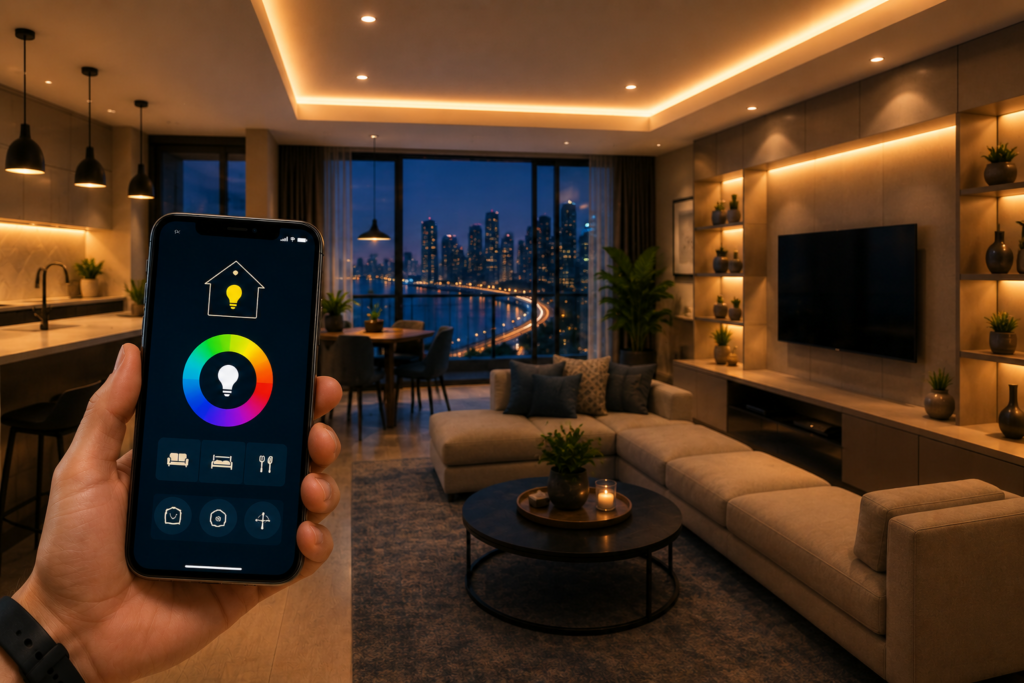
Imagine arriving home after a long day in Mumbai traffic and having your lights automatically switch on to the perfect brightness before you even step inside. Picture controlling every light in your home from your smartphone, creating customized moods for different occasions, and reducing energy consumption without sacrificing comfort.
This is no longer a futuristic concept. Smart home lighting automation Mumbai solutions are becoming increasingly popular among homeowners who want greater convenience, energy efficiency, security, and control over their living spaces. Whether you live in a luxury apartment, a modern villa, or a compact urban home, intelligent lighting can significantly enhance your everyday experience.
In this guide, we will explore how smart lighting works, the benefits it offers, and why it has become an essential component of modern home automation Mumbai projects.
What is Smart Home Lighting Automation?
Smart home lighting automation refers to the use of connected devices, sensors, controllers, and software that allow lighting systems to operate automatically or be controlled remotely.
Unlike traditional switches, automated lighting systems can:
- Turn lights on or off based on schedules
- Adjust brightness automatically
- Respond to occupancy and motion
- Create customized lighting scenes
- Integrate with voice assistants
- Be controlled through mobile applications
Modern lighting control systems provide homeowners with complete control over how and when their lights function, creating a more intelligent and efficient living environment.
Why Mumbai Homeowners Are Choosing Smart Lighting
Mumbai’s fast paced lifestyle has increased the demand for technologies that simplify daily routines. Smart lighting offers several advantages that align perfectly with urban living.
Convenience and Comfort
One of the biggest benefits of smart home lighting automation Mumbai solutions is convenience. Homeowners can control multiple lights from a single interface rather than managing individual switches throughout the house.
With predefined scenes, you can instantly create settings such as:
- Movie mode
- Reading mode
- Dinner mode
- Night mode
- Party mode
Each scene automatically adjusts brightness levels and lighting zones according to your preferences.
Improved Energy Efficiency
Energy conservation has become a major priority for modern homeowners.
Automated lighting systems help reduce unnecessary electricity consumption by:
- Switching off lights in unoccupied rooms
- Using motion sensors
- Scheduling operating hours
- Dimming lights when full brightness is unnecessary
This contributes to lower electricity bills while supporting sustainable living practices.
Enhanced Security
Smart lighting can improve home security even when residents are away.
Automated schedules can simulate occupancy by turning lights on and off at different times, making the property appear occupied. Motion activated lighting can also deter unwanted visitors and improve visibility around entrances and outdoor areas.
Understanding Lighting Control Systems
Centralized Lighting Control
Centralized lighting control systems allow homeowners to manage multiple lighting zones from a single interface.
This setup provides:
- Unified control
- Simplified management
- Consistent user experience
- Easy scene creation
Centralized systems are particularly beneficial for larger residences where multiple rooms and lighting circuits need coordinated operation.
Wireless Lighting Automation
Wireless technology has made smart lighting more accessible than ever.
Wireless systems offer:
- Faster installation
- Minimal structural modifications
- Scalability
- Remote access capabilities
This makes them ideal for both new construction projects and existing homes undergoing upgrades.
Sensor Based Automation
Smart sensors play a crucial role in lighting automation.
Common sensor types include:
Motion Sensors
Lights activate automatically when movement is detected and turn off after a predetermined period.
Occupancy Sensors
These sensors determine whether a room is occupied and adjust lighting accordingly.
Ambient Light Sensors
These sensors monitor natural daylight levels and automatically adjust artificial lighting to maintain optimal brightness.
Key Features of Smart Home Lighting Automation
Remote Access
Homeowners can control lighting from anywhere using smartphones or tablets.
Whether you are at work, traveling, or simply relaxing in another room, your entire lighting system remains accessible.
Voice Control Integration
Many smart lighting platforms integrate with popular voice assistants, allowing users to control lights through simple voice commands.
This hands free functionality adds convenience and accessibility for all family members.
Scene Customization
Different activities require different lighting environments.
Customized scenes allow users to instantly create ideal lighting conditions for:
- Watching television
- Entertaining guests
- Working from home
- Dining
- Relaxation
Scheduling and Automation
Advanced scheduling enables lights to operate automatically based on daily routines.
Examples include:
- Wake up lighting sequences
- Evening relaxation scenes
- Bedtime dimming schedules
- Vacation mode settings
Smart Lighting for Different Areas of the Home
Living Room
The living room serves multiple purposes throughout the day.
Automated lighting can adapt to:
- Family gatherings
- Movie nights
- Reading sessions
- Social events
Bedroom
Bedrooms benefit from gentle lighting transitions that support comfort and relaxation.
Features may include:
- Gradual morning illumination
- Night lighting pathways
- Reading lights
- Sleep mode dimming
Kitchen
Task based lighting automation improves visibility while preparing meals and performing household activities.
Outdoor Spaces
Exterior lighting automation enhances both security and aesthetics.
Applications include:
- Garden lighting
- Pathway illumination
- Entrance lighting
- Terrace ambiance
Factors to Consider Before Installation
Before investing in smart home lighting automation Mumbai solutions, homeowners should evaluate several factors.
Lifestyle Requirements
The ideal system should align with daily routines and household needs.
Scalability
Choose a solution that can accommodate future upgrades and expansions.
Integration Capabilities
Ensure compatibility with other smart home devices and automation platforms.
Professional Design and Installation
A properly designed system ensures reliable performance, intuitive operation, and long term satisfaction.
Working with experienced automation specialists helps maximize the value of the investment.
The Future of Home Automation in Mumbai
The demand for home automation Mumbai solutions continues to grow as technology becomes more sophisticated and accessible.
Future advancements are expected to include:
- AI driven lighting preferences
- Enhanced energy optimization
- Predictive automation
- Improved integration across smart home ecosystems
As urban homeowners increasingly prioritize convenience, efficiency, and personalized living experiences, smart lighting will remain a central component of modern home design.
TakeAway
Smart lighting is no longer considered a luxury reserved for high end residences. Today, smart home lighting automation Mumbai solutions offer practical benefits for homeowners seeking greater comfort, energy efficiency, security, and control.
Modern lighting control systems create seamless living experiences by automating everyday tasks and adapting to individual lifestyles. Whether you are building a new home or upgrading an existing property, investing in intelligent lighting can significantly improve the way you interact with your living space.
As technology continues to evolve, smart lighting will play an increasingly important role in shaping the future of home automation Mumbai, helping homeowners enjoy smarter, more connected, and more efficient homes.