
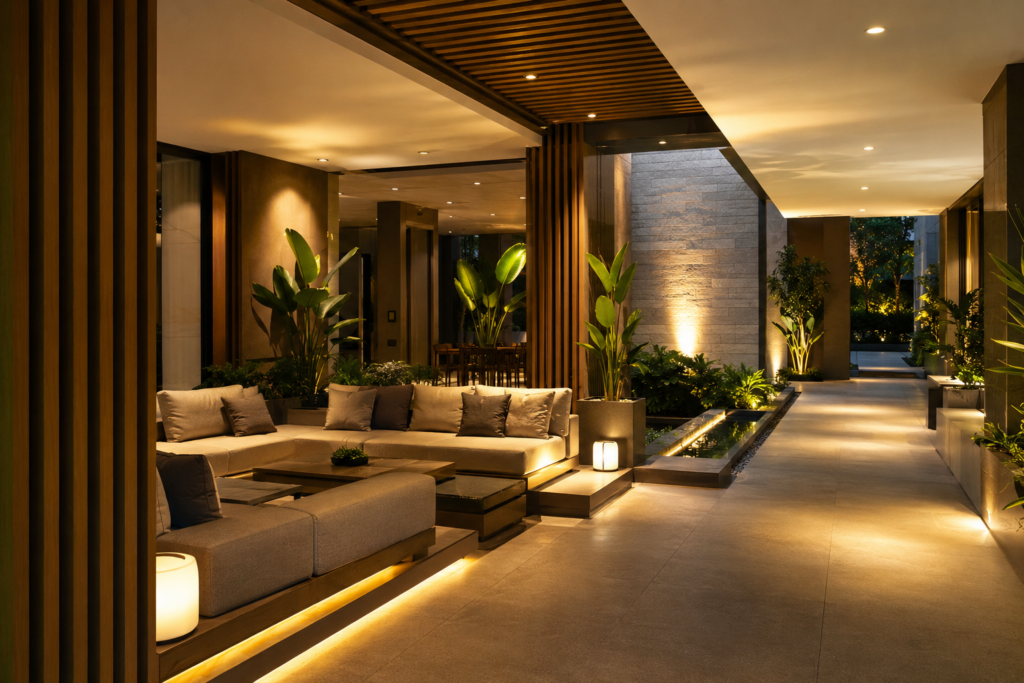
A lighting plan can look impressive on paper and still fail once the lights are installed.
You may have beautiful fixtures, advanced controls and a carefully planned interior, yet the space can feel too bright, too dark or simply uncomfortable. This is why choosing the right lighting design consultant India is not just about finding someone who knows different types of lights. It is about finding a professional who understands architecture, human comfort, technology, energy efficiency and the way a space will actually be used.
Whether you are developing a luxury residence, hotel, office, retail store, restaurant or large architectural project, the lighting consultant you choose can significantly influence the final experience.
What Does a Lighting Design Consultant Do?
A lighting design consultant plans how artificial and natural light should work within a space.
A professional lighting consultant studies the architecture, interiors, activities, materials and desired atmosphere before recommending lighting solutions. Their work can include fixture selection, illumination levels, lighting layouts, control systems, energy efficiency and coordination with architects, interior designers and electrical consultants.
A good architectural lighting consultant does not simply decide where fixtures should be placed. They consider what the light needs to accomplish.
For example, a restaurant may need warm and comfortable ambient lighting, while a corporate office may require carefully controlled illumination for workstations. A retail space may need accent lighting to draw attention to products, while a façade may require lighting that enhances architectural details after sunset.
Why Choosing the Right Consultant Matters
Lighting affects much more than visibility.
It influences how people perceive colour, texture, proportions and atmosphere. Poorly designed lighting can make premium materials appear dull, create uncomfortable glare or hide architectural features.
Professional lighting design can help you achieve:
- Better visual comfort
- Improved architectural presentation
- Appropriate illumination for different activities
- Greater control over ambience
- More efficient use of energy
- Better coordination between lighting, architecture and interiors
- A more cohesive overall design
The right consultant also helps prevent expensive mistakes. Changing lighting layouts after ceilings, walls and electrical systems are completed can be disruptive and costly.
1. Look for Relevant Project Experience
One of the first things to examine is the consultant’s previous work.
Experience matters, but relevant experience matters more.
A consultant who has primarily worked on residential interiors may not necessarily be the right choice for a large hospitality project. Similarly, a specialist in commercial offices may have a different approach from someone experienced in luxury retail or architectural façades.
Ask to see projects similar to yours.
Look at whether the consultant has experience with:
- Residential projects
- Hotels and hospitality spaces
- Offices and commercial buildings
- Retail environments
- Restaurants
- Landscape and façade lighting
- Public and institutional spaces
The objective is not simply to find a consultant with a long portfolio. It is to understand whether their experience matches your project’s scale, design language and technical requirements.
2. Understand Their Design Approach
Every lighting consultant has a design philosophy.
Some focus strongly on architectural integration. Others specialise in decorative lighting, energy efficiency, smart controls or technically complex installations.
During the initial discussion, ask how they approach a project.
A capable lighting consultant India should be able to explain how they move from understanding the brief to developing a lighting concept and eventually coordinating the implementation.
Pay attention to whether they ask questions about your project.
A thoughtful consultant will want to understand how the space is used, what atmosphere you want to create, which architectural features matter most and what practical constraints exist.
3. Check Their Technical Knowledge
Good lighting design combines creativity with technical understanding.
Your consultant should be comfortable discussing factors such as colour temperature, colour rendering, glare, beam angles, illumination levels, fixture positioning, dimming and control systems.
For larger projects, the discussion may also involve advanced lighting control technologies and integration with building management systems.
This is particularly important when your project requires sophisticated control over different lighting zones.
A visually attractive concept is only useful when it can be translated into a technically sound installation.
4. Consider Energy Efficiency
Energy efficiency should be part of the design conversation from the beginning.
A professional lighting designer can identify opportunities to reduce unnecessary energy consumption without compromising the visual quality of the project.
This may involve selecting appropriate LED systems, controlling operating hours, using dimming strategies and creating separate lighting zones.
The right solution is not always the one with the lowest initial cost. A lighting system should also be evaluated for performance, maintenance requirements, lifespan and operating costs.
5. Evaluate Their Understanding of Architecture
For architectural projects, lighting should support the architecture rather than compete with it.
An experienced architectural lighting consultant understands how light interacts with surfaces, volumes, textures and materials.
Consider a stone wall, for example. A poorly positioned light may flatten its texture or produce harsh shadows. A carefully selected fixture and beam angle can reveal the natural character of the surface.
The same principle applies to columns, ceilings, façades, landscaping and decorative elements.
This is where professional lighting design becomes a design discipline rather than simply an electrical exercise.
6. Ask About Lighting Controls
Modern projects increasingly require flexible lighting controls.
Instead of treating every light as an independent fixture, a well planned system can allow different areas and scenes to be controlled according to their use.
For example, a hospitality project may require separate settings for daytime, evening dining, cleaning and special events.
Ask the consultant whether they have experience with:
- Dimming systems
- Scene setting
- Automated controls
- Sensor based lighting
- Smart building integration
- Centralised lighting management
The appropriate control system depends on the project’s requirements, budget and technical infrastructure.
7. Assess Coordination With Other Consultants
Lighting does not exist independently from the rest of a project.
The lighting consultant may need to coordinate with architects, interior designers, electrical consultants, landscape designers, contractors and automation specialists.
Poor coordination can result in conflicts between lighting fixtures, air conditioning systems, ceilings, structural elements and other services.
Before appointing a consultant, understand how they collaborate with the wider project team.
Good communication during the design stage can save considerable time during execution.
8. Discuss Deliverables Before Appointment
Do not assume every lighting consultant provides the same scope of work.
Ask what you will receive as part of the engagement.
Depending on the project, deliverables may include:
- Lighting concepts
- Lighting layouts
- Fixture specifications
- Photometric calculations
- Lighting control concepts
- Fixture schedules
- Technical documentation
- Site coordination
- Mockup reviews
- Installation supervision
- Final aiming and focusing
Clarifying the scope early helps avoid misunderstandings later.
9. Compare Value Rather Than Just Fees
Cost is naturally an important consideration, but selecting a lighting consultant purely because they offer the lowest fee can create problems later.
A better comparison considers the consultant’s experience, design process, technical expertise, scope, coordination capabilities and project involvement.
A well designed lighting system can influence energy consumption, maintenance costs and the long term quality of the space.
Think about the total value of the design rather than only the professional fee.
10. Ask the Right Questions Before Hiring
Before selecting a lighting design company India, consider asking:
- Have you worked on projects similar to mine?
- Who will actually work on my project?
- What is included in your design scope?
- How do you coordinate with architects and electrical consultants?
- Do you provide lighting calculations?
- Can you recommend suitable lighting control systems?
- How involved are you during installation?
- Do you conduct site visits and final focusing?
- How do you approach energy efficiency?
- Can you explain why each lighting solution is suitable for the project?
The answers can reveal much more than a portfolio alone.
Lighting Design Should Begin Early
One of the most common mistakes is bringing a lighting consultant into the project too late.
Lighting decisions can influence ceiling details, electrical points, architectural elements, furniture layouts and interior finishes.
When the consultant is involved early, lighting can become part of the architecture rather than something added after the major decisions have already been made.
Early involvement also gives the team more freedom to explore creative solutions.
How to Identify a Truly Professional Lighting Consultant
The best consultant is not necessarily the person recommending the most expensive fixtures or the latest technology.
Look for someone who can explain why a particular solution is appropriate.
A strong lighting professional balances aesthetics, functionality, technology, energy efficiency, maintenance and budget.
They should also be comfortable saying when a complicated solution is unnecessary.
That practical judgement is often just as valuable as technical knowledge.
Frequently Asked Questions
What does a lighting design consultant do?
A lighting design consultant develops a lighting strategy for a project, including fixture selection, positioning, illumination, controls and coordination with the wider design and construction team.
When should I hire a lighting consultant?
Ideally, a lighting consultant should be involved during the early design stages so lighting requirements can be coordinated with architecture, interiors and electrical planning.
How do I choose a lighting consultant in India?
Review relevant project experience, technical expertise, design approach, previous work, coordination process, project scope and involvement during installation before making your decision.
Is an architectural lighting consultant different from an electrical consultant?
Yes. An electrical consultant generally focuses on electrical infrastructure and systems, while an architectural lighting consultant focuses specifically on how lighting supports the function, appearance and experience of a space. Their work often needs to be closely coordinated.
Is professional lighting design worth the investment?
For projects where ambience, architectural presentation, visual comfort and long term performance matter, professional lighting design can add significant value and help avoid costly design and installation mistakes.
Choosing the Right Partner for Your Project
The right lighting design consultant India should bring more than product knowledge to your project. They should understand how people experience spaces and how light can enhance architecture, interiors and functionality.
Start by reviewing relevant experience, understanding the consultant’s process and discussing technical requirements before appointment. Most importantly, choose a professional who listens to your objectives and can explain design decisions clearly.
When lighting is planned thoughtfully from the beginning, it becomes almost invisible in the best possible way. People simply notice that the space feels right.