
Walk into two offices with the same lighting fixtures and you may have completely different experiences. One feels bright, comfortable, and productive. The other has dark corners, glare, and uneven lighting that causes eye strain. The difference often has very little to do with the number of lights installed. It comes down to proper planning.
This is where Lux mapping services become essential.
Whether you are designing an office, retail showroom, hospital, educational institution, warehouse, or hospitality space, lighting should never be based on assumptions. Every commercial environment has recommended illumination standards that directly impact comfort, safety, operational efficiency, and energy consumption.
Professional lux mapping ensures every area receives the right amount of light exactly where it is needed.
What are Lux Mapping Services?
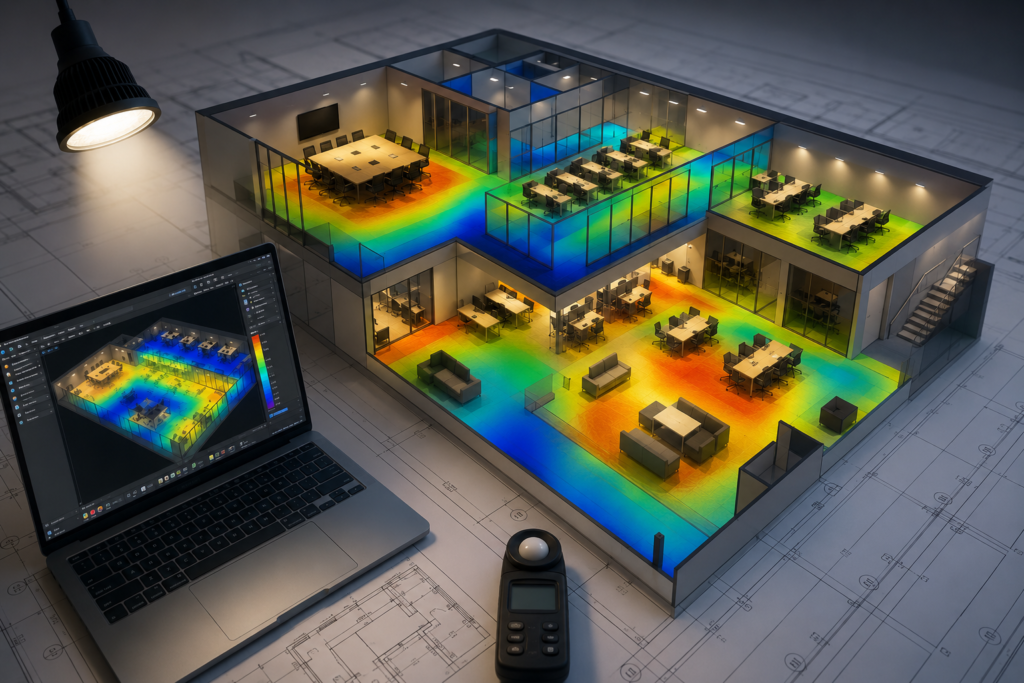
Lux mapping services are a scientific process used to measure, calculate, and visualize how light is distributed throughout a space before or after installation.
A lux map represents the illumination levels across different points within a room or building. It helps identify whether lighting is too bright, too dim, or unevenly distributed.
A professional lighting design consultant uses advanced software and engineering principles to ensure that lighting meets both functional and regulatory requirements.
Instead of relying on guesswork, lux mapping provides measurable data that supports better lighting decisions.
Understanding Lux Level Calculation
Before discussing the benefits, it is important to understand lux.
Lux is the unit used to measure the amount of light falling on a surface.
For example
- Office workstations require different lux levels than conference rooms.
- Hospital operating rooms need significantly higher illumination.
- Retail stores use carefully planned lighting to highlight products.
- Warehouses require uniform lighting for worker safety.
Accurate lux level calculation ensures every area performs as intended without excessive energy usage.
Why is Lux Mapping Important for Commercial Projects?
Commercial projects involve multiple activities, different occupancy patterns, and varying lighting requirements.
Without proper planning, businesses often experience
- Uneven lighting
- Dark spots
- Excessive glare
- Higher electricity bills
- Reduced employee productivity
- Customer discomfort
- Difficulty meeting industry standards
Professional commercial lighting design solves these issues before construction or renovation is completed.
How Lux Mapping Works
The process combines engineering expertise with advanced simulation tools.
Site Evaluation
The project begins with understanding the building layout, ceiling heights, materials, furniture placement, natural daylight availability, and intended use of every area.
Lighting Requirements
Each space is evaluated according to its function.
Different lux levels are recommended for
- Offices
- Hospitals
- Hotels
- Educational institutions
- Retail outlets
- Manufacturing units
- Warehouses
DIALux Lighting Simulation
Modern DIALux lighting design software creates a digital model of the project.
The software predicts
- Light distribution
- Brightness levels
- Uniformity
- Glare
- Fixture performance
- Energy efficiency
This allows designers to optimise the layout before installation begins.
Illumination Analysis
A detailed illumination analysis verifies whether lighting is evenly distributed across the space.
Areas with insufficient or excessive lighting can be corrected early, reducing expensive modifications later.
Final Lux Map
The completed lux map visually displays illumination levels across the project, helping architects, consultants, engineers, and clients make informed decisions.
Benefits of Lux Mapping Services
Improved Visual Comfort
Balanced lighting reduces eye fatigue and creates a more comfortable working environment.
Employees remain productive while visitors enjoy a better overall experience.
Better Energy Efficiency
Many commercial buildings are overlit simply because lighting calculations were never performed.
Accurate planning allows businesses to install only the fixtures they actually need.
This reduces both installation costs and long term electricity expenses.
Compliance with Industry Standards
Many commercial facilities must comply with recommended lighting standards for safety and operational efficiency.
Professional lighting consultancy services help projects achieve appropriate illumination levels for their specific applications.
Enhanced Safety
Warehouses, manufacturing plants, hospitals, and parking areas require sufficient lighting to minimise accidents.
Lux mapping identifies underlit areas before they become safety risks.
Better Return on Investment
Lighting is a long term investment.
A properly planned lighting system provides
- Lower maintenance costs
- Reduced energy consumption
- Longer fixture lifespan
- Improved occupant satisfaction
Where are Lux Mapping Services Used?
Professional commercial lighting solutions are valuable across numerous industries.
Corporate Offices
Proper illumination supports employee productivity, reduces fatigue, and improves workplace comfort.
Retail Stores
Well planned lighting enhances product visibility and improves customer engagement.
Healthcare Facilities
Hospitals and clinics require accurate lighting for patient care, diagnostics, and medical procedures.
Educational Institutions
Balanced classroom lighting improves concentration and learning outcomes.
Hotels
Luxury hospitality spaces depend on carefully controlled lighting to create memorable guest experiences.
Warehouses
Uniform lighting improves operational efficiency and workplace safety.
Industrial Facilities
Manufacturing environments require specialised lighting based on operational tasks.
Lighting Audit vs Lux Mapping
Although they are closely related, these services have different purposes.
A lighting audit evaluates an existing lighting system.
It typically reviews
- Current fixture performance
- Energy consumption
- Maintenance issues
- Upgrade opportunities
- Operational efficiency
Lux mapping focuses specifically on measuring and analysing illumination levels across a space.
Many professional projects combine a lighting audit with illumination analysis to create an effective improvement strategy.
Why Work with a Professional Lighting Design Consultant?
Lighting design involves much more than selecting attractive fixtures.
An experienced lighting design consultant considers
- Human comfort
- Architectural intent
- Energy efficiency
- Sustainability
- Building functionality
- Lighting controls
- Future maintenance
Professional planning reduces costly design errors while delivering a better experience for occupants.
Common Mistakes Businesses Make
Many commercial projects still rely on assumptions rather than data.
Some common mistakes include
- Installing excessive lighting
- Ignoring natural daylight
- Choosing fixtures based only on appearance
- Skipping illumination analysis
- Not performing lux level calculations
- Failing to evaluate glare
- Overlooking long term operating costs
Professional lighting consultancy services help avoid these costly issues.
Frequently Asked Questions
What are Lux Mapping Services?
Lux mapping services measure and analyse illumination levels across a space to ensure lighting is evenly distributed and suitable for its intended purpose.
Why is lux level calculation important?
Lux level calculation ensures every workspace receives appropriate lighting for comfort, safety, productivity, and energy efficiency.
What software is commonly used for lux mapping?
Many professionals use DIALux lighting design software to simulate lighting performance before installation.
Is lux mapping only useful for new buildings?
No. Existing buildings also benefit from lux mapping during renovations, energy optimisation projects, and lighting upgrades.
How does a lighting audit differ from lux mapping?
A lighting audit evaluates the overall performance and efficiency of an existing lighting system, while lux mapping focuses specifically on illumination levels and light distribution.
Final Thoughts
Lighting has a direct impact on productivity, safety, customer experience, and operational costs. Investing in professional Lux mapping services allows commercial projects to move beyond assumptions and make informed lighting decisions based on measurable data.
Whether planning a new development or upgrading an existing facility, combining commercial lighting design, illumination analysis, lux level calculation, and expert lighting consultancy services creates spaces that are efficient, compliant, visually comfortable, and built to perform for years to come.
If you are planning a commercial project, working with experienced lighting professionals can help you achieve the right balance between aesthetics, functionality, and energy efficiency through carefully engineered commercial lighting solutions.